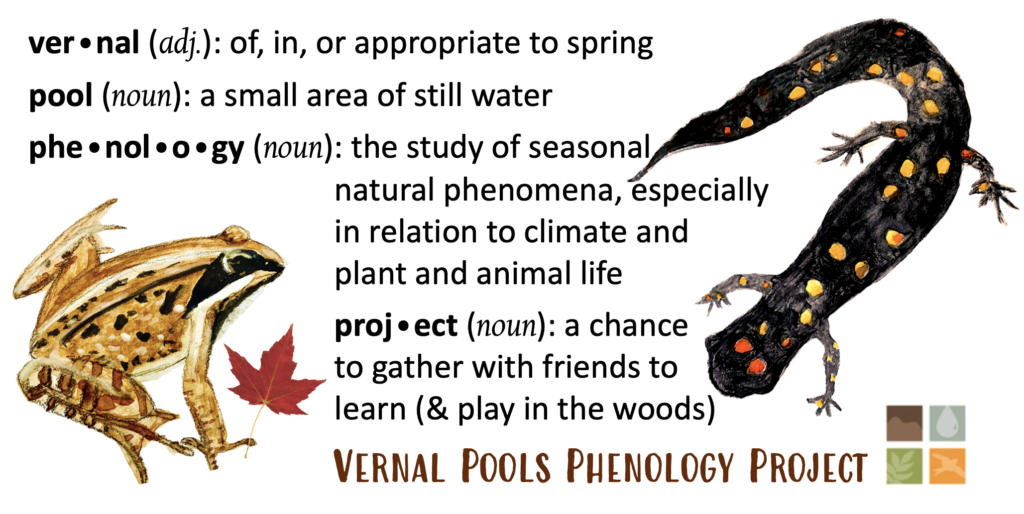
In Spring 2022, we established a pilot study and collected baseline data on phenology of pool-breeding amphibians and plants surrounding vernal pools. The pilot study was conducted by participants at five institutions in the northeastern United States, all of whom are members of the Ecological Research as Education Network (EREN).
Our overarching project goal is to implement a macrosystems-scale, multi-site, long-term study to test for phenological asynchrony between plants and breeding amphibians.
Our research questions include:
- What are the relative influences of local-, landscape-, and ecoregion-scale factors on timing of amphibian breeding (egg laying and calling)?
- Does the first date of calling coincide with egg-laying dates across geographies for a widespread species, the wood frog?
We are currently recruiting additional participants to expand the geographic range of our network’s sites in 2023.
In addition to collecting amphibian and plant phenophase data, we also monitor water level and air/water temperature (using a water gauge and dataloggers) and wildlife visitations to vernal pools (using trail cameras) throughout the year at each study pool.
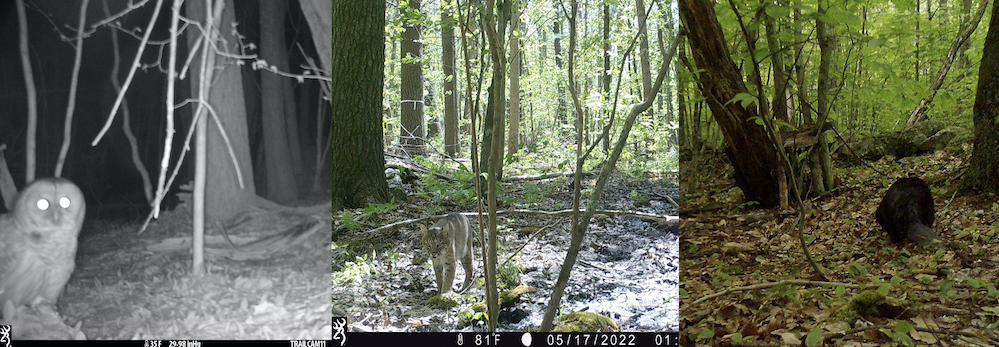
A few highlights from the trail cameras at our UNH Vernal Pool Phenology Project study pools in spring 2022: barred owl, bobcat, beaver (left to right).
Community engagement and education are critical for effective conservation of species and we love bringing our passion for the natural world to our community. In our first season of this project, we jumped into working with third-graders at Mast Way Elementary School in nearby Lee, NH, as they explored amphibians, vernal pools, sketching in science, and field observation skills.